Our Office
3125 Coffee Rd.
Suite 1
Modesto, CA 95355
Existing Patients: (209) 529-2726
New Patients: (209) 207-5740
Visit Us Online

A teeth whitening procedure or bleaching simply refers to any process that will make the teeth appear whiter. It is considered a non-invasive procedure that is designed to whiten and brighten teeth that are stained, discolored, darkened, or yellowed. First introduced to the public in the 1980’s, the popularity of teeth whitening products and procedures has soared. According to a survey conducted by the American Academy of Cosmetic Dentistry, when respondents were asked, “What would you like to improve most about your smile?” The most common response was: whiter and brighter teeth.
How white a tooth appears depends upon how light is reflected and scattered off the enamel, the outermost layer of the tooth. Teeth can look dark or discolored for a variety of reasons, with an imperfect appearance the result of outer surface stains or discoloration from within the tooth. While external tooth stains are typically due to certain foods and tobacco, internal tooth discoloration is mainly the result of hereditary factors, certain medications, tooth decay, restorations, or trauma. Additionally, the aging process can influence the color of a tooth. This is because over time the outer layer of enamel becomes thinner showing more yellowish tones from the underlying layer of dentin.
What are the advantages of a professional teeth whitening procedure performed by a dentist?
Although over the counter teeth whitening systems purchased in stores or online have become popular, there are health concerns and limitations with these products. If the manufacturers protocol is not correctly followed, certain products can damage the teeth and soft tissues in the mouth, and may not deliver the results as promised. Teeth whitening systems contain varying concentration of either hydrogen peroxide or carbamide peroxide, which act as the bleaching agents. When sensitive teeth, exposed roots, cavities, broken fillings, cracked teeth, or loose dental work are present, a teeth whitening procedure may be contraindicated. Also, since whitening systems do not have an effect on the color of dental fillings, crowns or bridges the presence of restorations is an important cosmetic consideration in treatment planning.
In general, individuals with yellow tones to their teeth respond best to teeth whitening procedures. Brown and grayish tinted teeth bleach respond less well and may require significantly longer dentist supervised tooth whitening regimens or alternative cosmetic treatments. Finally, teeth whitening may not be recommended in the presence of sensitive teeth, worn enamel and significant gum disease.
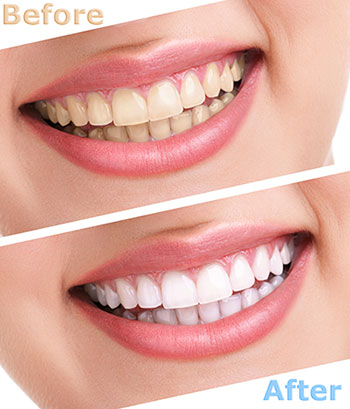
As a rule the healthiest and most effective methods of teeth whitening are the ones managed and supervised by the dentist. An in-office teeth whitening procedure as performed by the dentist is the most reliable and safest way to get the maximum results quickly. In as little as one hour a prescription-strength, in-office whitening procedure can dramatically whiten and brighten the natural teeth by several shades, while the surrounding tissues and any sensitive areas of the teeth are carefully isolated and protected from the bleaching agents.
A home whitening system from the dentist along with custom trays that have been fitted to the teeth is also an excellent option. Custom trays keep the bleaching agent in maximum contact with the teeth and away from the other areas of the mouth. With a take-home teeth whitening system, maximum results are less rapid than an in office procedure and are typically achieved over a longer period of time. A home whitening system can be used by itself or as recommended by the dentist as a follow up to an in office procedure in order to perfect or maintain the results.
Professional teeth whitening is a dentist-supervised cosmetic treatment that lightens tooth discoloration using peroxide-based bleaching agents. It targets stains on the enamel and can reduce the appearance of discoloration caused by foods, beverages, smoking and natural aging. A clinical evaluation is performed first to confirm that the teeth and gums are healthy and appropriate for whitening.
In an office procedure the dental team applies a higher-concentration bleaching gel and uses protective measures to shield the gums and soft tissues. The active ingredients break down stain molecules on the tooth surface to reveal a brighter shade. When performed correctly, professional whitening provides faster, more predictable results than most over-the-counter options.
In-office whitening typically uses stronger bleaching agents and is applied under direct professional supervision, which allows for greater control and faster results. Over-the-counter products contain lower concentrations of peroxide and rely on prolonged, repeated application at home, so they often take longer to produce noticeable change. The dentist evaluates oral health beforehand and can customize the treatment for even and safe whitening.
Professional treatments also include safeguards such as soft-tissue barriers and precise application techniques to minimize gum irritation and sensitivity. Custom trays and take-home kits provided by a dentist contain higher-quality gels than retail items and are designed to fit your mouth more accurately. These differences help explain why clinical whitening is generally more effective and predictable.
Ideal candidates are adults with healthy teeth and gums who want to improve the color of natural tooth enamel. People with untreated decay, active gum disease, or significant enamel erosion should address those issues before whitening to reduce the risk of sensitivity and uneven results. A dental exam is necessary to determine individual suitability and to identify any restorations that might affect outcomes.
Dental restorations such as crowns, veneers and composite fillings do not whiten like natural teeth, so patients with visible restorations may need alternative cosmetic options to achieve a uniform smile. Your dentist can recommend solutions such as replacing restorations, using veneers, or combining whitening with other cosmetic treatments. A tailored treatment plan ensures realistic expectations and the best aesthetic result.
Your appointment begins with an oral exam to confirm that whitening is appropriate and to address any oral health concerns. The dental team will clean and dry the teeth, protect the gums and soft tissues, and then apply the whitening gel to the tooth surfaces. Typical in-office sessions last about an hour, during which the gel is applied for controlled periods and removed between cycles.
Many patients experience only mild sensations during treatment, and staff monitor comfort throughout the procedure. After the session you will receive instructions for immediate care and recommendations for maintenance to preserve results. If needed, the dentist can provide desensitizing treatments or suggest a transition to a supervised take-home regimen.
When performed under a dentist's supervision, teeth whitening is considered safe for most people and does not permanently damage tooth enamel. The bleaching agents break down stain molecules rather than dissolving enamel, and protective measures are used to minimize exposure to soft tissues. The dentist will assess for conditions that could increase risk and recommend appropriate precautions.
Mild, temporary sensitivity and occasional gum irritation are the most common side effects and typically resolve on their own or with simple management. Dentists can mitigate sensitivity with topical desensitizers, fluoride treatments or adjusted application protocols. Proper case selection and professional oversight help ensure a safe and comfortable experience.
The longevity of whitening varies by individual and depends on dietary and lifestyle habits such as consumption of coffee, tea, red wine, and tobacco use. Good oral hygiene, regular professional cleanings and minimizing exposure to staining substances will help preserve results. Many patients use periodic touch-ups, either with supervised take-home trays or occasional in-office sessions, to maintain their desired shade.
Your dentist can create a personalized maintenance plan based on your habits and the specifics of your treatment. Using a whitening toothpaste occasionally and avoiding abrasive products can reduce surface stains without affecting the whitening effect. Regular dental visits also allow your provider to monitor shade stability and recommend refresh treatments when appropriate.
Whitening is most effective for extrinsic stains on the enamel caused by foods, beverages and tobacco. Intrinsic stains — those within the tooth structure caused by trauma, certain medications or fluorosis — are often more resistant to conventional bleaching. Because the causes of discoloration vary, an evaluation is necessary to determine how well whitening will address a specific stain.
For intrinsic discoloration the dentist may recommend alternatives such as internal bleaching for a tooth that has undergone root canal treatment, or restorative options like veneers or bonding to improve appearance. A custom treatment plan will identify the best approach to achieve a natural, even result given the type and severity of the staining.
Mild, temporary sensitivity to hot and cold is a common and usually short-lived response to bleaching agents, especially in patients with preexisting sensitivity. The sensation results from transient changes in fluid movement within the dentinal tubules and typically subsides within days after treatment. Your dentist can assess baseline sensitivity and adjust the treatment protocol to minimize discomfort.
Management strategies include using lower-concentration gels, shortening application times, applying topical desensitizers or prescribing a fluoride regimen before and after whitening. Over-the-counter desensitizing toothpaste can also help when used regularly. If sensitivity is severe or persistent, further evaluation is recommended to rule out other dental issues.
Common side effects are generally mild and temporary, including increased tooth sensitivity and brief gum irritation where the whitening agent contacts soft tissue. Uneven results can occur if there are existing restorations or areas of enamel wear that respond differently to bleaching. Rarely, overuse or improper application of whitening products can cause longer-lasting sensitivity or soft-tissue irritation.
To reduce risk, treatments should be performed or supervised by a dental professional who can ensure proper application and monitor for adverse reactions. Patients should report any severe pain, prolonged sensitivity or unusual tissue changes so the dentist can evaluate and provide appropriate treatment. A pre-treatment exam helps identify and address factors that could elevate risk.
To schedule a consultation, call the office at (209) 529-2726 and ask for an appointment to discuss teeth whitening and a personalized treatment plan. The practice is located at 3125 Coffee Rd., Suite 1, Modesto, CA 95355, where the team can perform an exam, discuss options and review any concerns you may have. During the visit the dentist will evaluate oral health, review expectations and recommend the best, evidence-based approach for your smile.
If you have restorative work, sensitivity or specific aesthetic goals, mention those details when you call so the staff can prepare for a focused consultation. The office will explain the steps involved, possible side effects and maintenance recommendations so you can make an informed decision. A tailored plan ensures safe care and predictable results aligned with your goals.